Safeguarding Critical Infrastructure: J Tech Solutions Wastewater Gas Detection & Calibration Ecosystem
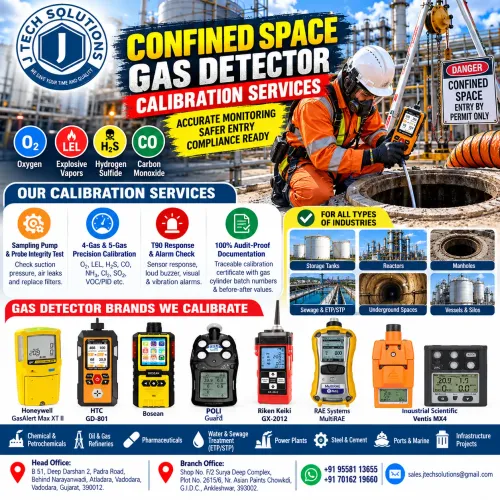
Wastewater treatment plants, municipal sewage networks, and industrial effluent processing facilities operate under continuous chemical and biological threat. The natural anaerobic decomposition of organic sludge, combined with industrial waste runoffs, creates a harsh chemical environment saturated with lethal toxic gases, invisible asphyxiants, and highly volatile explosive compounds. Wet wells, digester tanks, aeration basins, scum pits, and underground interceptor tunnels represent extreme confined-space hazards where gas accumulation occurs rapidly and without warning.
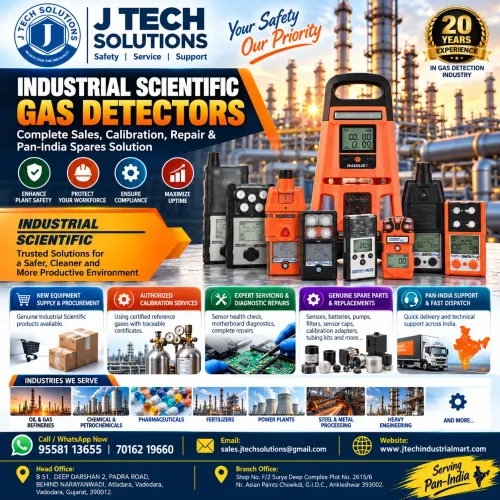
A single unmonitored atmospheric leak in a wastewater facility can lead to catastrophic consequences: fatal worker asphyxiation, devastating plant explosions, ruined pumping infrastructure, and crippling regulatory penalties. To protect operating crews, maintain uninterrupted municipal service, and comply with strict Environmental Health and Safety (EHS) mandates, facilities cannot rely on basic ventilation or unverified hardware. You need an elite technology partner that delivers robust hardware paired with certified laboratory precision. J Tech Solutions provides a comprehensive end-to-end framework of Wastewater Gas Detection Supply, System Integration, and Certified Calibration Services.
Part I: The Primary Atmospheric Hazards in Wastewater Treatment
Wastewater infrastructure produces a hazardous mix of gases that must be continuously monitored across both personal worker zones and fixed facility perimeters:
- Hydrogen Sulfide (H2S): Generated by sulfate-reducing bacteria in stagnant wastewater. Known for its 'rotten egg' odor at low levels, H2S rapidly deadens the human sense of smell at higher concentrations, leading to sudden olfactory fatigue, paralysis, and fatal respiratory failure.
- Methane (CH4): A byproduct of sludge digestion inside anaerobic digesters. Highly combustible and lighter than air, methane poses extreme lower explosive limit (LEL) risks when confined in enclosed structures.
- Carbon Monoxide (CO): A colorless, odorless toxic gas produced by incomplete combustion in facility boilers, incinerators, and gas-driven heavy machinery.
- Oxygen (O2) Deficiency: Microbial activity and chemical oxygen demand (COD) displace ambient air inside sewer vaults and storage tanks, dropping oxygen levels below safe thresholds (19.5%) and causing rapid loss of consciousness.
- Ammonia (NH3) & Chlorine (Cl2): Toxic chemical vapors released during sludge dewatering, nitrification phases, and final effluent disinfection processes.
Part II: Hardware Supply & System Integration Architecture
At J Tech Solutions, we engineer defensive systems built explicitly to withstand the aggressive humidity and hydrogen sulfide corrosion typical of wastewater facilities:
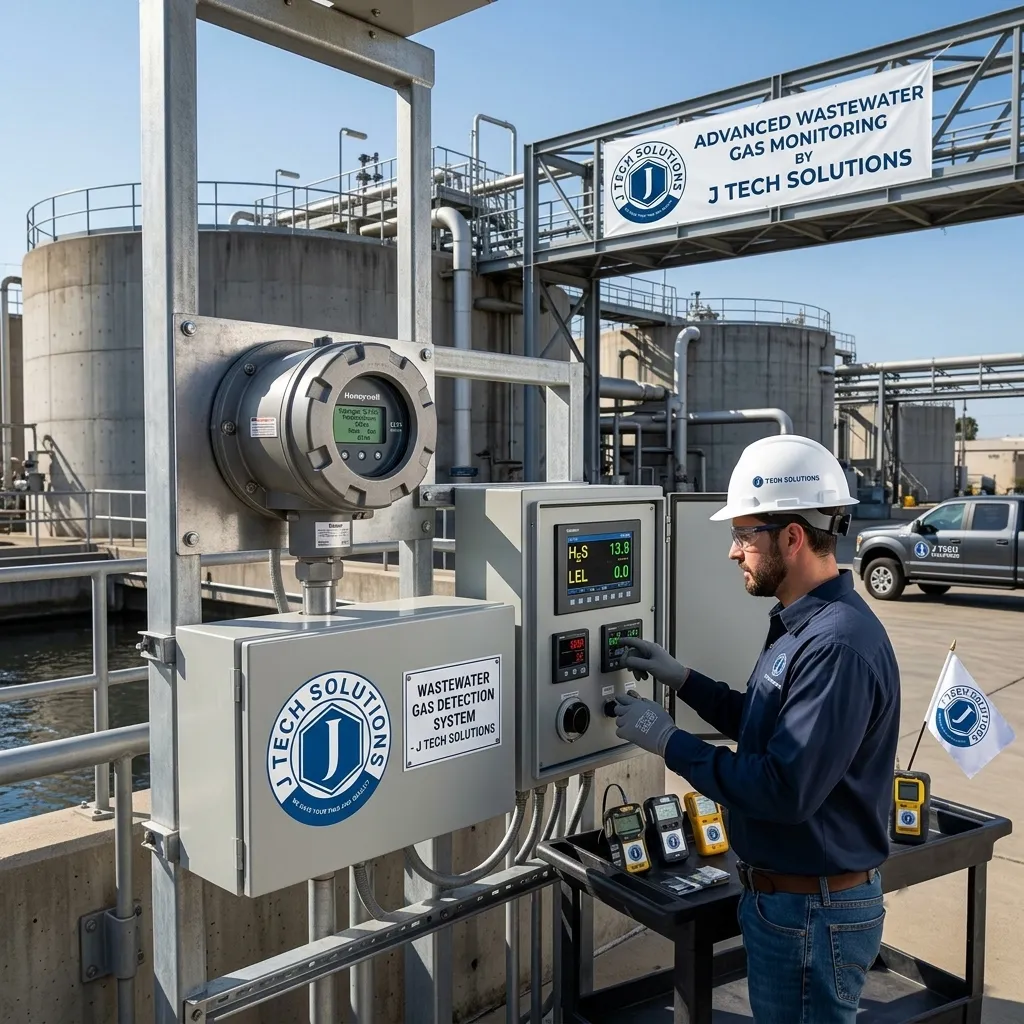
1. Fixed Area Gas Detection & Transmitters
- Explosion-Proof (Ex-d) Enclosures: Built inside heavy aluminum or stainless steel housings certified for Hazardous Area Zone 1 and Zone 2 environments.
- Poison-Resistant Sensors: Outfitted with specialized electrochemical cell technology and Non-Dispersive Infrared (NDIR) sensors that resist chemical fouling and silicone poisoning.
- Seamless SCADA & PLC Integration: Features standard 4–20mA, Modbus RS-485, and HART protocol outputs to feed real-time gas data directly into plant-wide automation controllers, automatically triggering emergency exhaust blowers and isolation valves.
2. Portable Personal Multi-Gas Monitors
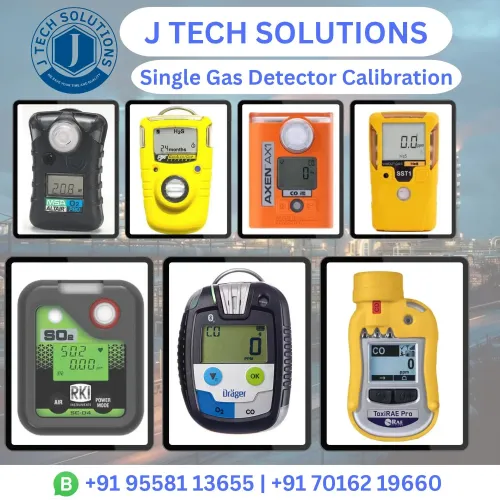
- Ruggedized Ingress Protection: Rated up to IP68 dust-and-waterproof standards to survive accidental submersion in raw sewage or wet well sludge.
- Intrinsically Safe (Ex-ia) Certification: Certified safe for use in explosive atmospheres by field technicians entering manholes and underground interceptors.
- Triple-Threat Alarm Matrix: Features ultra-bright flashing LED light bars, a piercing 95dB horn, and heavy internal vibration alerts that pierce through deafening pump-room noise.
Part III: Certified Calibration Services & Lifecycle Support
The most advanced gas detector in a wastewater plant is rendered useless if its sensors drift due to continuous exposure to background gases. Over time, sensors experience chemical exhaustion and sensitivity loss.
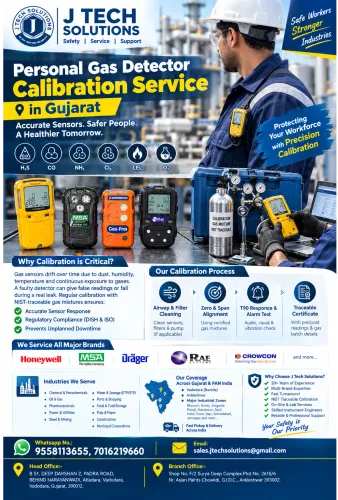
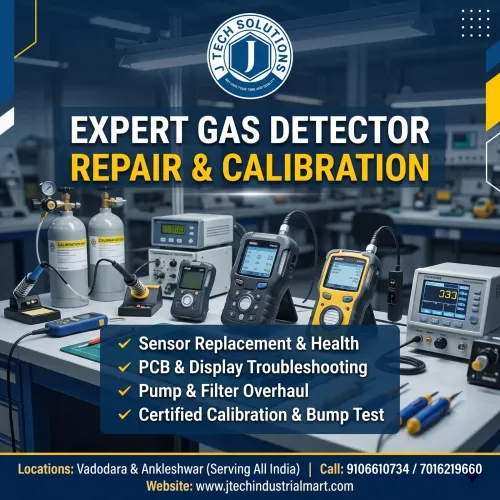
J Tech Solutions operates a state-of-the-art metrology laboratory to maintain your plant's detection fleet to pristine factory accuracy:
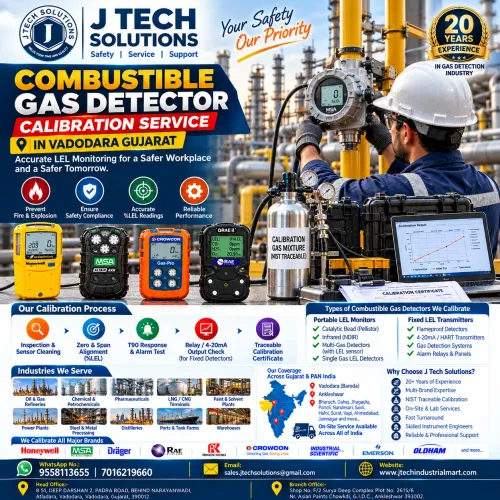
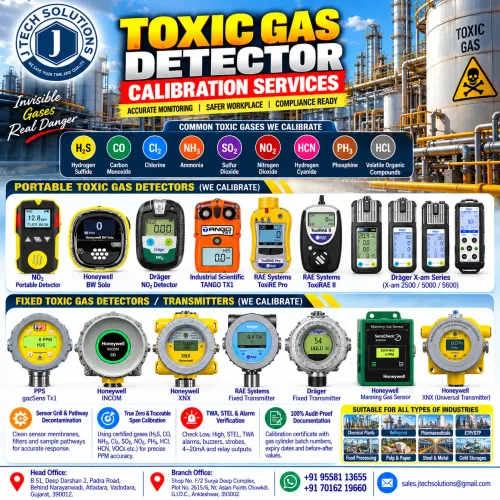
- NIST-Traceable Reference Gas Simulation: Our certified metrology team calibrates your fixed sensors and portable instruments using certified, National Institute of Standards and Technology (NIST) traceable reference gas mixtures.
- Firmware Re-Linearization: We interface directly with sensor microprocessors, adjusting electrical gain curves and zero-baseline parameters to counteract sensor drift.
- Response Time (T90) & Health Audits: We test sensor reaction speeds to ensure target alarm thresholds fire in seconds, replacing depleted or sluggish sensors with factory-original parts.
- Official Calibration Certification: Every serviced unit is returned with an official, serialized Certificate of Calibration Compliance to serve as your legal shield during regulatory safety inspections and EHS compliance audits.
The J Tech Solutions Advantage: Uncompromised Environmental Safety
Choosing J Tech Solutions means securing absolute operational confidence for your municipal or industrial wastewater plant. From personal 4-gas monitors for confined space entry to plant-wide fixed detection grids integrated into your SCADA system, we supply equipment built to survive severe chemical environments. Backed by our certified laboratory calibration services and preventive maintenance agreements, we ensure your plant stays safe, operational, and fully compliant with national workplace safety standards.
Equip your facility. Protect your crew. Enforce absolute atmospheric safety with J Tech Solutions.
Keywords